The Telegraph, the Train, and the Birth of a Leisure Engine
Most origin stories of slots start with Charles Fey’s Liberty Bell in 1895, but the machine’s ancestry is surprisingly intertwined with 19th-century industrial signaling. Telegraph operators and railroad switchmen used levered, clicky devices to send signals across distances; those same tactile instincts — the satisfying throw of a lever and the reassuring clack of metal — migrated into parlors where people wanted an accessible, repeatable thrill.
The early pay-out mechanics echo telegraph logic: binary outcomes, simple encoded messages (coin or no-coin), and a physical feedback loop that told you at once whether your input worked. That lineage helps explain why the first slot machines felt less like toys and more like compact industrial machines: they were designed for rhythm and repetition, not narrative. Recognizing this gives us a new appreciation for why the lever persisted even after electronic reels — it was cultural muscle memory, wired into the public from a century of signaling technology.
Fruit, Gum, and the Unlikely Marketing Coup
When slot operators wanted to skirt anti-gambling laws in the early 20th century, they turned to something apparently innocent: chewing gum. Fruit imagery and the BAR symbol weren’t arbitrary aesthetic choices; they were branding solutions. Makers like the Bell-Fruit Gum Company used fruit and bar icons to denote gum flavors or prizes instead of cash, allowing machines to operate in a gray area of the law.
This marketing workaround left a permanent imprint. The symbols became cultural shorthand for slot play — a lexicon of cherries, lemons, and sevens that persisted into the digital era. In other words, online slots still wear the costume of a legality workaround from a hundred years ago. That costumed identity helps explain why modern developers often blend retro fruit reels with advanced mechanics: it’s a wink to the genre’s carnival origins.
From Electromechanical Hums to Code: The Hidden Computing Lineage
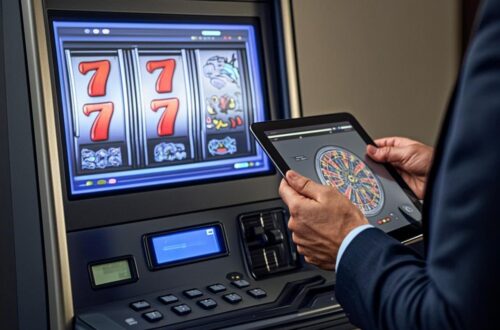
The jump from mechanical reels to digital slots wasn’t just a change of medium; it carried a lineage of computing innovation. Mid-century electromechanical machines like Bally’s Money Honey in the 1960s introduced relays and simple circuits that anticipated electronic randomization. Engineers who designed those early electromechanical pay tables were doing combinatorics long before high-level RNGs existed.
When the first video slots and later online versions emerged, they borrowed not only visual metaphors but also statistical thinking from early computing — the same probabilistic frameworks used in wartime codebreaking and Monte Carlo simulations. Claims that online slots are purely intuitive entertainment ignore this math-heavy inheritance: the digital spin is essentially live probability engineering, descended from the same problem-solving culture that produced early computers and cryptographic work.
Microgaming, Malta, and the First Virtual Casinos — a Sovereign Sandbox
The online era’s political geography is a surprising chapter in the history. The first viable online casino platform is commonly attributed to Microgaming in the mid-1990s, and the legal environment that enabled their growth was not Silicon Valley but small forward-thinking jurisdictions like the Isle of Man and Antigua and Barbuda. These islands acted as sovereign sandboxes, offering licensing and tax structures that let entrepreneurs connect server-side randomness to global players.
This geopolitical scaffolding shaped product design: developers optimized for cross-border latency, payment workarounds, and regulatory audit trails. The result was an early web-era engineering sprint where cryptographic seeds, server RNGs, and compliance logs had to coexist with glossy themes and animation. That tension — between backend legitimacy and frontend spectacle — is baked into the genre: what appears to be simple fun is supported by protocols built to survive legal and technical scrutiny.
Sound, Psychology, and the Reinvention of Mechanical Feedback
The audible cues of slots — the chimes, coin rains, and celebratory fanfares — are direct descendants of mechanical payout acoustics. Sound designers for online slots deliberately emulate the resonance of metal, coin, and bell because the brain’s reward circuitry responds strongly to those particular cues. Neuroscience research into auditory reward shows that learned associations can be as powerful as actual wins, which is why a virtual coin cascade still triggers dopamine spikes.
Understanding this gives us a different view of game design: modern studios are remixing century-old Pavlovian tricks with contemporary UX. Themes, narratives, and bonus rounds are new layers, but the ancient trick remains: give the player a rhythm of expectancy and a sound that confirms reward. Designers who recognize and refine that acoustic lineage create more compelling games — whether the reels are physical or rendered in code.
Cultural Echoes: Why Slots Keep Returning to Story and Myth
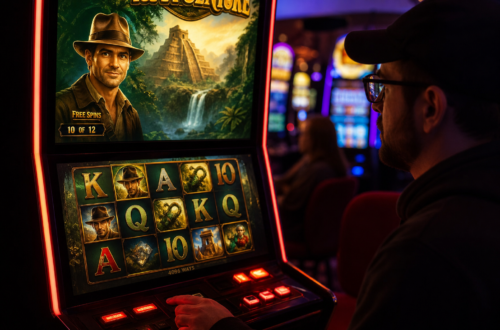
If you look at slot themes — ancient Egypt, Norse gods, cinematic franchises — you see a pattern: slots have always borrowed myth and story to give mechanical repetition emotional texture. The surprising origin here is that narrative hasn’t displaced the slot’s mechanical heart; it serves to contextualize the same loop. Early parlors used visual cues and themed cabinets to attract different demographics, and online slots simply scale that tactic globally.
This means the future of slots isn’t binary — it’s an ongoing interplay between narrative branding and probability engineering. As VR and live-service mechanics evolve, the slot’s DNA will likely absorb richer stories while preserving the signaling, auditory, and mathematical scaffolding that made the genre endure.