The Identity Crisis That Changed Everything
Sometime around 2020, something strange happened in the basements and boardrooms of iGaming studios. The people who design online slots—the mathematicians, the artists, the psychologists—started hiring narrative designers. Not marketers. Not copywriters. Narrative designers. People who had worked on video games, animated series, even interactive fiction. The slot machine, that most unapologetic of gambling devices, was having an identity crisis.
The catalyst was brutally simple: attention. In a post-pandemic world where a single scroll through TikTok delivers more dopamine hits per second than a fruit machine ever could, the old formula—spin, flash, maybe win, repeat—started feeling prehistoric. Studios realized they weren’t just competing with other slots anymore. They were competing with Netflix, with Call of Duty, with the endless, hypnotic feed. And they were losing.
So the industry did something uncharacteristic: it evolved. Not in the slow, incremental way industries usually change, but in a frantic, almost desperate burst of creativity that has, over the past few years, produced some of the most bizarre and fascinating hybrid entertainment experiences on the internet. The online slot didn’t just get better graphics. It went to film school.
From Spin Buttons to Story Arcs
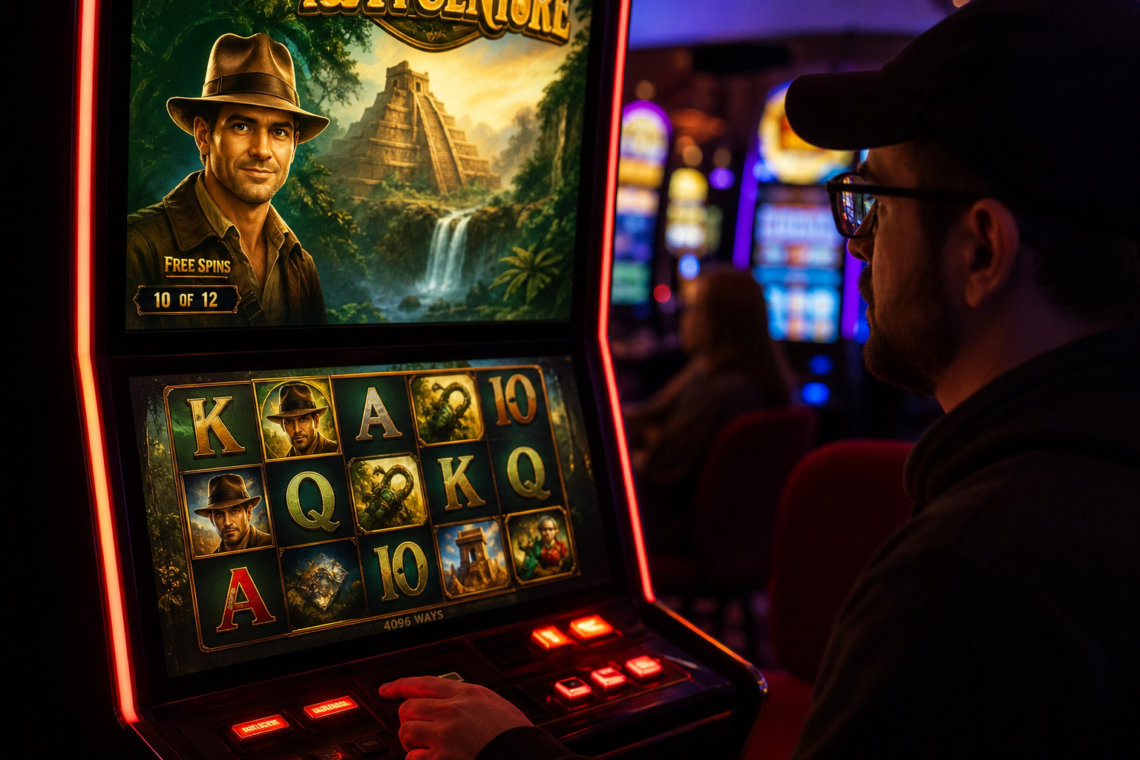
The most visible change in online slots over the past few years has been the wholesale adoption of narrative structure. We’re not talking about a themed skin slapped onto the same old five-reel format—pirates this month, ancient Egypt next month. We’re talking about games that actually have acts.
Titles like those in the emerging ‘progressive narrative’ category introduce characters with motivations, conflicts that escalate over bonus rounds, and even branching outcomes based on player choices. Some games now track your ‘relationship’ with in-game characters across sessions, remembering decisions you made weeks ago. It’s a structure borrowed directly from episodic television, and it represents a fundamental shift in how slots conceive of their audience: not as gamblers who want a quick hit, but as players who want to be invested.
The mechanics have followed suit. Where a traditional slot might offer a free spins round, newer games offer ‘chapter unlocks’—bonus features that only become available after you’ve experienced certain story beats. The effect is peculiar: you’re still, technically, gambling, but the experience feels closer to playing through a season of an interactive drama. The reel is still there, spinning, but it’s been demoted from the main event to a kind of narrative punctuation mark.
The Twitch Effect: When Watching Became Playing
Perhaps no external force has shaped the evolution of online slots more than streaming culture. When slots streamers began broadcasting their sessions to tens of thousands of viewers on platforms like Twitch and Kick, studios got something they’d never had before: a real-time, unfiltered window into how people actually experience their games. And what they saw surprised them.
Viewers weren’t just watching for the big wins. They were watching for the personalities, the communal tension, the shared experience of near-misses and heartbreaks. They were, in other words, watching for the same reasons people watch sports or reality television. This insight triggered a wave of design changes. Studios began building ‘spectator-friendly’ features: visual effects scaled for broadcast, bonus rounds dramatic enough to elicit a streamer’s reaction, volatility profiles tuned for entertainment value rather than pure mathematical efficiency.
Some games now include features specifically designed to create shareable moments—cascading multipliers that build on screen, bonus triggers that pause dramatically before resolving. It’s a design philosophy that treats the viewer, not just the player, as a primary audience. The slot has become, in a very real sense, a broadcast medium.
The Quiet Death of the Payline
Here’s something that would have seemed impossible five years ago: some of the most popular online slots today don’t have paylines at all. The traditional grid—rows and columns with specific lines determining wins—has been quietly dismantled and replaced with systems that would have been computationally extravagant a decade ago.
Megaways engines, cluster pays, expanding reels, cascading symbols, dynamic grid sizes that shift mid-spin: the mechanical vocabulary of online slots has exploded. A single spin in a modern high-end slot might involve thousands of potential symbol positions, multiple layers of symbol transformation, and real-time recalculation of odds based on in-game events. The reel, that iconic vertical strip of symbols, has become almost metaphorical—a visual shorthand for a system that is, under the hood, closer to a real-time simulation than a mechanical device.
This mechanical evolution has had a strange cultural side effect: it has made slots genuinely difficult to understand. Where a grandparent could intuitively grasp a three-reel fruit machine, understanding the full mechanic set of a modern slot requires study. Communities have sprung up around decoding these games, creating strategy guides, sharing ‘mechanic breakdowns’ that read more like game reviews than gambling advice. The slot has become, improbably, a hobbyist’s pursuit.
Personalization and the Slot That Knows You
The most recent, and perhaps most consequential, evolution in online slots is the quiet integration of personalization algorithms. Drawing on techniques pioneered by social media and e-commerce, some platforms now dynamically adjust the slot experience based on player behavior. Not the odds—that remains regulated and fixed—but the presentation. The themes you see featured, the volatility profiles recommended to you, the pacing of bonus features: all increasingly tailored to individual preferences inferred from your play history.
This has raised uncomfortable questions that the industry is still grappling with. If a platform knows that a player responds more strongly to certain visual stimuli, certain reward frequencies, certain narrative tropes, is it simply offering good service, or is it engineering a more effective trap? The line between personalization and exploitation, always blurry in digital products, becomes razor-thin in a gambling context.
Regulators have begun to take notice. Several jurisdictions are now debating whether personalization in gambling products constitutes a form of targeted psychological intervention requiring special oversight. It’s a conversation that will likely define the next chapter of the industry’s evolution—and one that most players, spinning away in their personalized lobbies, have no idea is even happening.
What the Slot Becomes Next
So where does this leave us? The online slot of 2026 is a strange chimera: part gambling device, part video game, part interactive film, part social broadcast, part algorithmic mirror. It has absorbed influences from every corner of the digital entertainment landscape and reshaped them into something that is, depending on your perspective, either a triumph of creative engineering or a remarkably sophisticated delivery system for a very old human vulnerability.
What seems certain is that the trajectory will continue. Virtual reality slots, already in early deployment, promise to make the ‘immersive’ label literal. AI-generated narrative content could make every player’s story unique. The integration of skill-based elements—already controversial—could further blur the line between gambling and gaming. The slot machine that went to film school may soon go to art school, to therapy, to places we can’t yet predict.
The one thing it won’t do is go back to being simple. That version is gone, replaced by something stranger, more ambitious, and considerably more difficult to categorize. Whether that’s progress or something else entirely is a question worth spinning on.