When Slots Become Storytellers
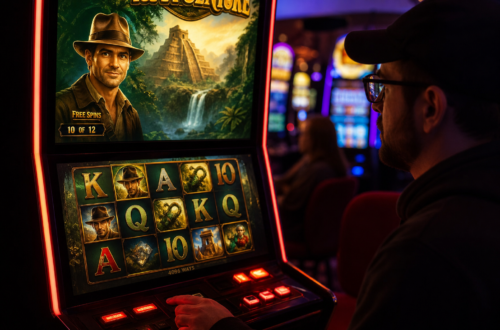
What used to be a line of spinning reels has quietly become a narrative engine. Developers are using procedural storytelling and AI to stitch player actions into emergent story arcs—so your ten-minute session can feel like an episode of a serialized drama. These systems track choices, wins, losses, and even chat interactions to alter music, visuals, and plot beats, creating retention patterns that resemble those of streaming services more than casinos.
This shift changes the unit of engagement from a single spin to an unfolding relationship with a character or world. Players return not merely for payouts but to see how their in-game personas fare. The psychological payoff is different: it’s about curiosity and continuity rather than short bursts of dopamine. For studios, that means higher lifetime value per player and new monetization models that blend subscriptions, episodic purchases, and cosmetic economies.
Micro-Communities and the Rise of Slot Guilds
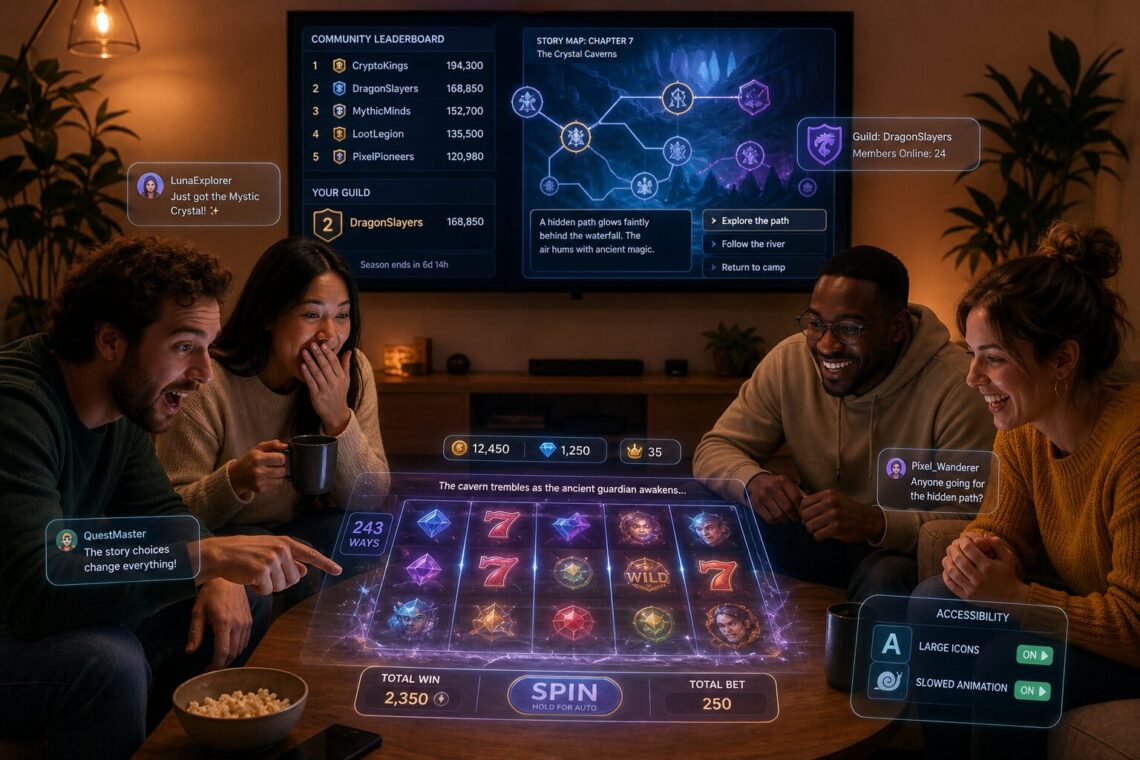
Online slots are seeding micro-communities—tight-knit groups formed around shared playstyles, creative challenges, and cooperative goals. These ‘slot guilds’ are not just chatrooms; they coordinate strategies, trade in-game artifacts, commission fan art, and launch cooperative competitions with pooled stakes.
Guilds change the competitive landscape. Operators who support social features (shared pools, guild leaderboards, cross-title rewards) see organic retention and user acquisition. They also create new governance dynamics where influential players shape meta-strategies and, in some cases, negotiate directly with developers on content priorities.
Transparent Math and the New Trust Economy
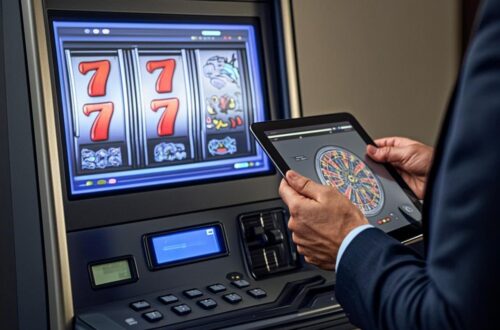
In an era of skepticism, a surprising change has been the push for transparency. Some platforms now publish RNG audits, modular payout simulations, and even real-time probability visualizations that demystify outcomes without spoiling gameplay. This is not merely compliance theater—it’s a marketing differentiator.
Transparency has spawned a secondary market of data-savvy players and independent auditors who analyze patterns, producing reputational feedback loops. Operators that embrace openness build communities that police fairness for them; those that don’t risk being outcompeted or ostracized.
Tokenized Incentives and Real-World Utility
Tokenization has seeped into slots in pragmatic ways. Instead of speculative cryptocurrencies, many operators experiment with purpose-built tokens that carry utility—access to tournaments, governance votes in community-driven events, redeemable perks with partners, or contributions to charity pools.
These tokens transform payouts from ephemeral wins into assets with utility beyond the reels. Players treat tokens as membership keys or social signals, not merely currency. That shift nudges the industry toward hybrid models where entertainment, community, and micro-economies intersect, making slots a vector for broader digital participation.
Accessibility, Neurodiversity, and Inclusive Game Design
Unexpectedly, Play Slots Online has become a testbed for inclusive mechanics. Developers are introducing adjustable sensory profiles, cognitive load tuning, and alternative reward feedback loops designed for neurodivergent players. Features like simplified modes, slower tempo spins, and customizable visual contrast are reducing entry barriers.
The result is a broader player base and a design mindset shift: accessibility is not a niche add-on but a core pillar. This humanitarian angle also reshapes regulation and brand perception—operators that prioritize inclusion are increasingly seen as responsible entertainers rather than extractive platforms.
Augmented Reality Living Rooms and the Physical-World Crossover
AR has turned the living room into a social casino table. Rather than being confined to a mobile screen, slots are projected into physical spaces where friends watch animated reels on coffee tables or cluster around a shared AR jackpot. This cross-pollination of digital mechanics and physical presence creates hybrid experiences—watch parties, mixed-reality tournaments, and location-based bonuses tied to real-world venues.
This physical crossover opens partnerships with hospitality, retail, and entertainment industries and shifts marketing from acquisition funnels to shared experiences that drive word-of-mouth credibility.
Regulation as a Design Constraint—and a Creative Catalyst
Instead of viewing regulation solely as a threat, innovative teams treat legal limits as design constraints that spark creativity. Mandated loss limits, mandatory play breaks, and clearer pay tables have led to new game formats where pacing, meta-progression, and non-monetary rewards are front and center. Designers now craft meaningful short-term goals and narrative rewards that satisfy players without encouraging harmful behavior.
When regulation is integrated into the design process, the product ecosystem shifts toward longevity and player welfare, aligning industry incentives with public interest and opening doors for mainstream partnerships and ad-supported models.
The Indie Renaissance: Small Teams, Big Experiments
A surprising democratization has occurred: small indie teams are launching experimental slots that prioritize art, mechanics, and social hooks over pure RTP math. These boutique titles often go viral for reasons unrelated to payouts—striking aesthetics, unusual rule systems, or layered narratives that inspire communities.
Indies push incumbents to innovate, and their successes prove that slots can be culturally relevant artifacts, not purely financial instruments. Platforms that cultivate indie creators diversify their catalogs and capture attention in a crowded entertainment market.
Looking Forward: An Industry Remade by Culture, Not Just Capital
Play Slots Online is morphing from a transactional pastime into a cultural medium. It borrows from streaming, social gaming, token economies, and accessibility design to become something that entertains, builds communities, and sometimes even educates. The transformations are subtle but structural: changing how games are made, how players interact, and how value is perceived.
The unexpected outcome is that slots are less about spinning reels and more about spinning narratives, networks, and shared experiences. That redefinition could make the next decade of online slots less about extraction and more about cultural participation—and that’s a story worth watching.