The 3 A.M. Congregation
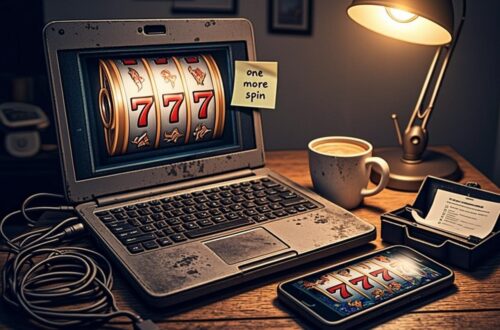
If you have ever been awake at three in the morning, you know the particular texture of that silence — the hum of the refrigerator, the radiator ticking, the sense that the rest of the world has been switched off. What you may not know is that you are not alone. At any given hour, millions of small screens are glowing in dark bedrooms, parked cars, and hospital break rooms, their reels turning in soft, patient loops. The people behind those screens are the subject of this article, because the story of online slots is almost never told as a story about people. It is told as a story about algorithms, jackpots, and odds. But every spin has a human hand behind it, and every human hand has a story.
Consider Denise (names and details throughout this piece are composites drawn from player communities, recovery forums, and interviews with industry workers — the truths are real, even where the identifying details have been changed). Denise is an ICU nurse who finishes twelve-hour shifts with her nervous system still running at emergency speed. Before she drives home, she sits in her car in the parking garage and plays a low-stakes slot game for twenty minutes. ‘It’s the only part of my day where nothing is asking me for anything,’ she says. She has never won more than sixty dollars. She has never chased a loss past her ten-dollar limit. For her, the spin button is less a gamble than a metronome — a rhythm she can attach her frayed attention to until her heart rate comes back down to earth.
Researchers who study gambling behavior keep bumping into a truth that the billboards never mention: for a large share of casual players, the appeal of a spinning reel is not the jackpot at all. It is the noise, the structure, the sense of being somewhere. The bonus-round jingle is ambient companionship. The leveling-up banner is a small, uncomplicated pat on the back in a week that offered none. That is the honest, complicated heart of the matter — the same qualities that make a slot game soothing to an exhausted nurse can make it predatory to someone whose brain is wired a little differently, or whose life has quietly fallen apart. This article intends to hold both of those truths at once, because the people living them do.
Maureen’s Machine: When a Bonus Round Becomes a Memorial
Maureen, seventy-one, plays exactly one game. It is a fishing-themed slot her husband Al discovered during the last year of his life, when hospital stays blurred into hospital stays and the two of them passed the evenings watching big-win videos on a shared tablet. ‘Al could never win anything in real life,’ she laughs. ‘Man couldn’t catch a fish either. But he loved that little tune the game plays when the bonus triggers.’
When Al passed, Maureen did something that grief counselors now say is quietly common: she opened the game on her own phone. The first time the bonus round fired and that little tune played, she cried for an hour. Two years later, she still plays a few spins most evenings. Her deposit limit is fifteen dollars a month. She has never raised it. ‘It isn’t about winning,’ she told her daughter, who initially worried. ‘It’s the only place in the world that still says hello to me the way he did.’
This is the strange, under-examined territory where digital games and human memory collide. Online slots are engineered to be sticky, but stickiness is not the same as meaning, and meaning is what players bring to them. A game becomes a vessel — for a marriage, a hospital year, a friendship, a chapter of someone’s life. There are widowers who play their late wives’ favorite game on the anniversary of their first date. There are adult children who keep a parent’s account open, unable to close a tab that still shows their mother’s last level. The reels, it turns out, remember things too. And for a small but very real group of players, that is precisely the point — and precisely why, for them, the healthiest relationship with the game is a bounded ritual rather than a habit.
The Woman Who Built the Chimes — and Then Unplugged Them
Someone makes those sounds. That sentence sounds obvious, but sit with it for a moment. The triumphant fanfare that plays when you ‘win’ forty cents on a two-dollar spin — a outcome the industry frankly calls a ‘loss disguised as a win’ — was composed by a person, at a desk, probably on a Tuesday. The escalating arpeggio of a near-miss, engineered to feel like the reels barely got away from you, was tuned and retuned by human hands.
One of those hands belonged to an audio designer I’ll call Priya, who spent six years making celebratory sounds for a major game studio. She was good at it — her ‘win’ sting tested in the ninety-fourth percentile for emotional response. Then, at a family dinner, her mother-in-law proudly showed off a slots app on her phone, scrolled through four months of transaction history, and revealed she was down nearly two thousand dollars. ‘She kept saying, but look how often I win,’ Priya recalls. ‘And I recognized every single sound she was hearing. I had made them. I had made her losses feel like wins.’
Priya left the industry within a year. Today she designs ambient soundscapes for a sleep app, and she speaks openly about what she calls ‘the architecture of attention’ — the reality that every chime, color flash, and vibration in a slot game is a deliberate decision made by a thoughtful human being. Her message is not that players are victims or that designers are villains. It is simpler and more useful: players deserve to know the room they are standing in was built by professionals, on purpose, to hold their gaze. Knowing that, she says, is the first real act of informed consent. The second is setting a limit before the music starts.
The Streamer’s Couch: A Neighborhood Bar with 40,000 Regulars
For a growing number of people, online slots are not a solitary activity at all — they are a social one, watched rather than played. Slot streaming has become a genuine subculture, and its communities function like the corner